Frequently asked questions
Clear answers to the most common questions about giving blood. Can't find your answer? Ask our assistant or our team.
Giving blood
Why donate, free donation, blood groups and the products made from your donation.
Nothing can replace human blood: only donations make treatment possible. A single donation can save up to 3 lives — emergencies, surgery, sickle cell disease, maternity, severe burns. It is a voluntary act of citizenship and solidarity.
Donated blood is almost never transfused as it is: it is separated by centrifugation into three labile blood products. Red cell concentrates carry oxygen (42 days between +2 °C and +6 °C); platelet concentrates stop bleeding (up to 7 days under agitation, between +20 °C and +24 °C); fresh frozen plasma provides clotting factors (1 to 2 years, frozen).
Blood donation is completely free and voluntary: blood is never paid for or sold. It is an act of solidarity, and donors are never charged anything.
After collection, your blood is biologically tested (safety analyses), then separated into products (red cells, plasma, platelets) and supplied to hospitals to treat patients.
All blood groups are needed! O negative (universal donor) is precious for emergencies, but every group is useful. Your blood group is determined when you donate.
Who can donate?
Eligibility criteria, waiting periods and how often to donate.
To give blood you must be between 18 and 65, weigh at least 50 kg and be in good shape (no fever, no ongoing infection, no extreme fatigue). On the day: do not come on an empty stomach (have a light meal), drink water before and after, and do not drink alcohol in the hours before. A confidential medical interview approves every donation. Some situations require a waiting period: pregnancy and breastfeeding (up to 6 months after giving birth), a recent tattoo, piercing or surgery (4 months).
Men can donate up to 4 times a year (one donation every 3 months); women up to 3 times a year (every 4 months). Your eligibility is checked again at every donation during the medical interview.
Some situations require a waiting period before donating: pregnancy and breastfeeding (up to 6 months after giving birth), a recent tattoo, piercing or surgery (wait 4 months), fever or ongoing infection (wait until you have recovered). Medication and recent travel are assessed during the medical interview, which decides in case of doubt.
Donation day
How it works, documents to bring, pain, snack and rest.
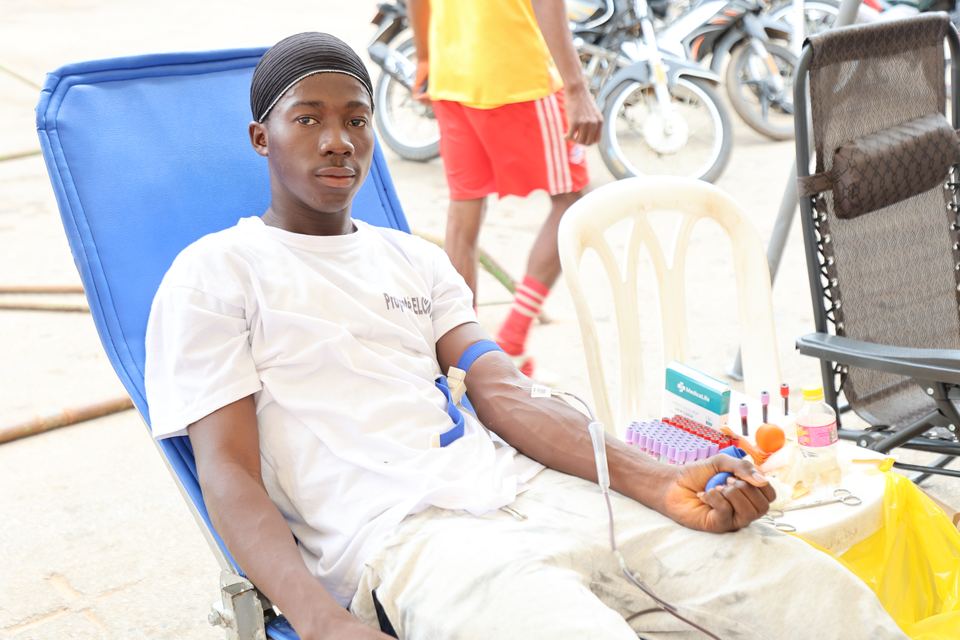
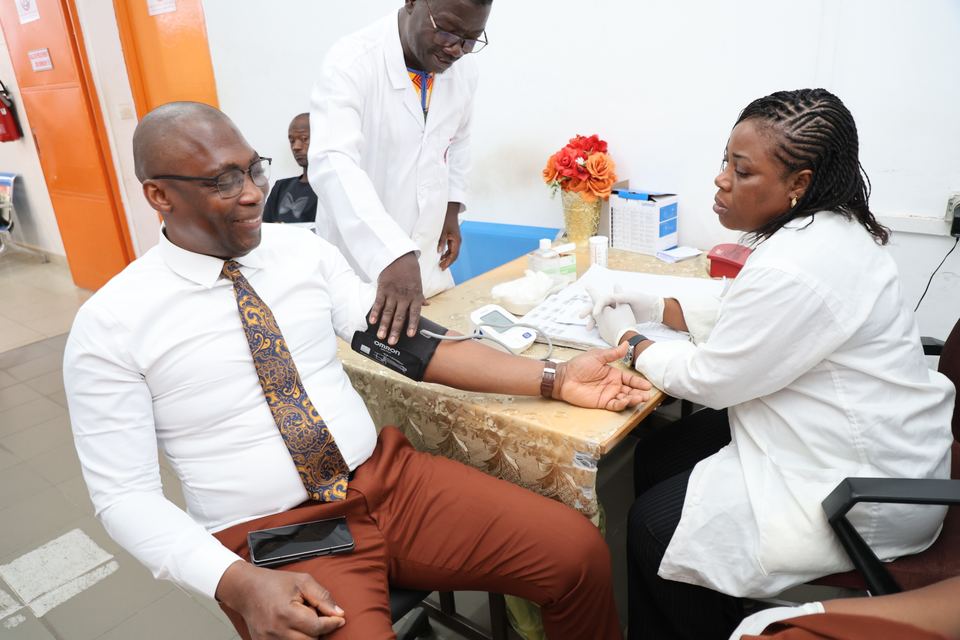
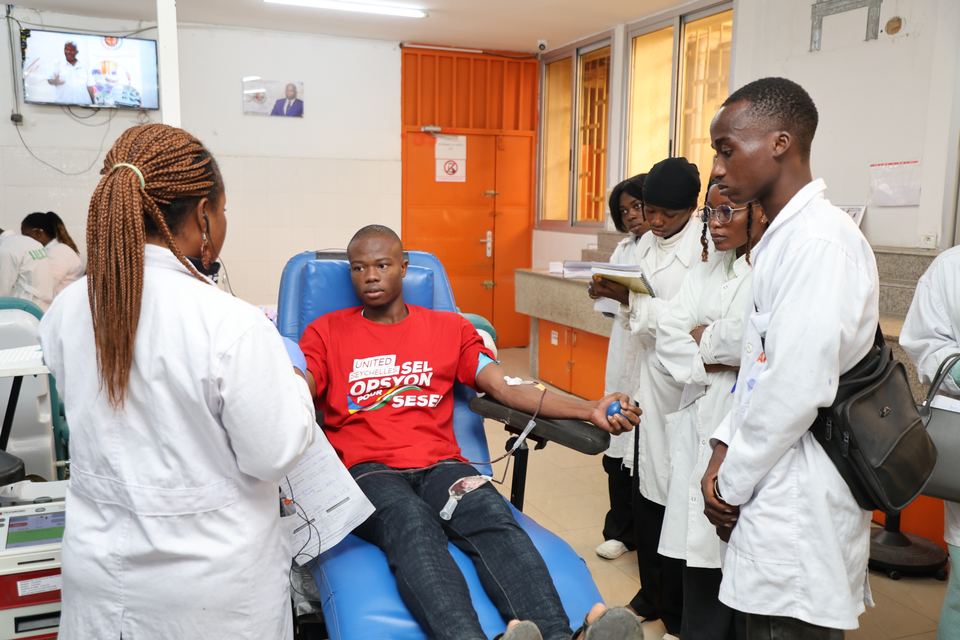
Allow about 40 minutes, in 4 steps: 1) reception and registration, with the medical questionnaire (~5 min); 2) medical interview: weight, haemoglobin level, blood pressure and a confidential talk (~10 min); 3) collection, seated in a donation chair (8 to 10 min); 4) snack and a mandatory 15-minute rest. You then receive a transport allowance: 1,000 F for new donors at a fixed site, 2,000 F for regular donors, 1,000 F at mobile sites. All equipment is sterile and single-use.
Donating is almost painless: you only feel a small prick when the needle is inserted. The team is with you so that everything goes smoothly and with confidence.
Simply bring an identity document (national ID card, passport…). Remember to eat well and drink before you come. That's all you need!
Yes. After the collection, a 15-minute rest is mandatory so that your body can recover, and you are offered a snack, followed by the transport allowance. Avoid intense effort in the following hours and drink plenty of water.
Practical information
Centres, appointments and CNTSCI contact details.
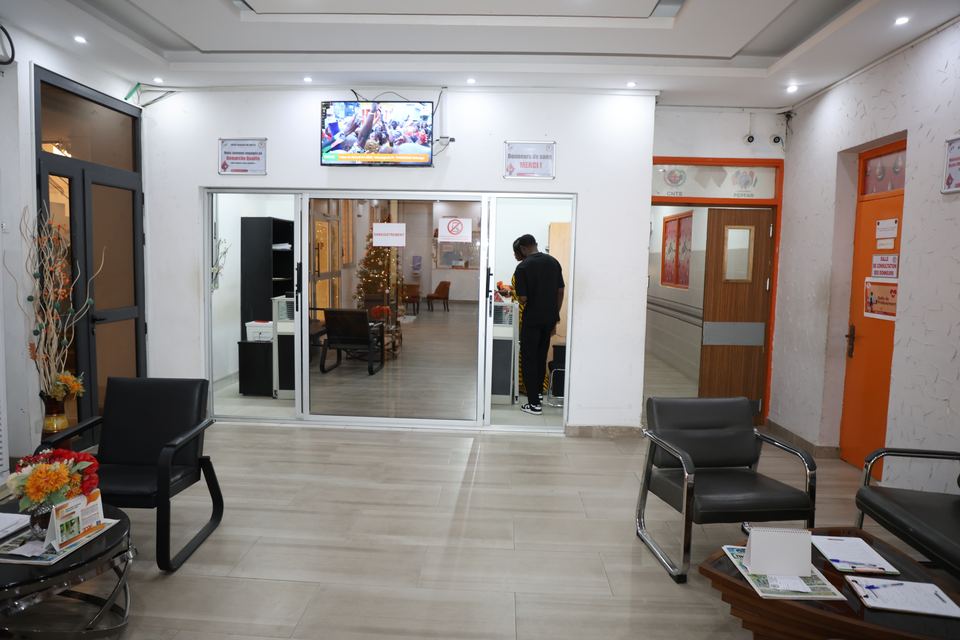
CNTSCI relies on a national network of 10 Regional Blood Transfusion Centres (CRTS), 18 District Centres (CDTS) and 6 Collection Sites, plus mobile blood drives. The national headquarters is on Boulevard de Marseille, Zone 3, Treichville (Abidjan). Find the centres and their opening hours on the dedicated page.
Book your donation online in a few clicks: choose a centre, a date and a time slot. You receive an appointment reference to show on the day. You can also use the “Don de sang” mobile app.
You can reach us on +225 07 59 42 09 66 (phone / WhatsApp), by email at contact@cntsci.ci, or at the national headquarters in Treichville, Abidjan.
Didn't find your answer?
Our assistant answers 24/7 at the bottom right of the screen.
Our team also answers by phone, WhatsApp or email.